About this course
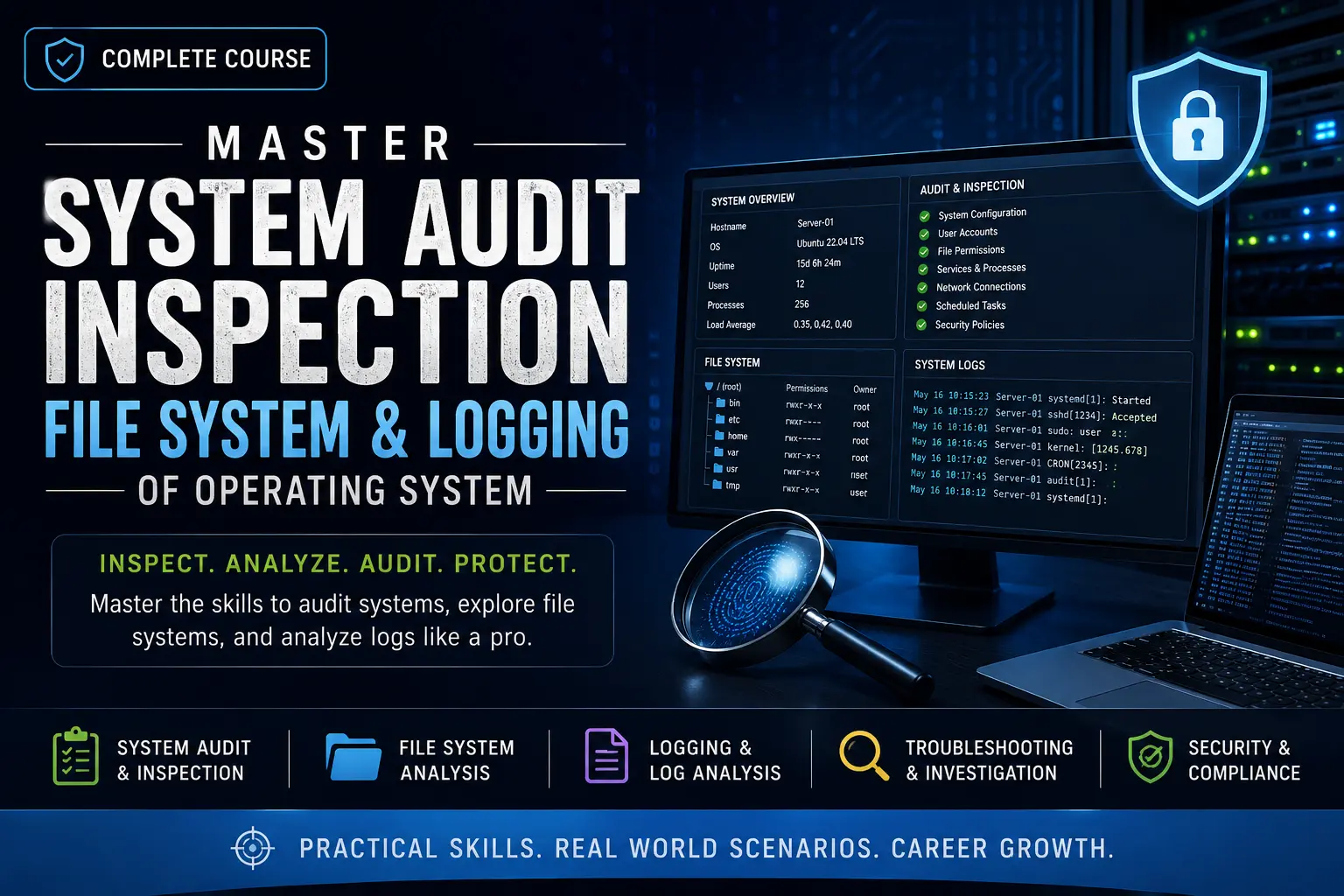
Learn and master the essential skills required to inspect, audit, analyze, and troubleshoot operating systems, file systems, and system logs—all in one comprehensive course.
This hands-on course takes you beyond basic system administration and teaches you how to investigate what is happening inside an operating system. You’ll learn how to perform system audits and inspections, analyze file systems, understand operating system activity, investigate logs, identify anomalies, and use system evidence to troubleshoot and improve security and performance.
Whether you are an aspiring system administrator, IT professional, cybersecurity practitioner, auditor, or technical learner, this course provides a practical foundation for understanding how systems work and how to examine them effectively.
What You’ll Learn
Understand the fundamentals of system auditing and inspection
Inspect operating system configurations, processes, services, users, and resources
Understand file system structures, permissions, ownership, and access
Learn how to examine files, directories, metadata, and system activity
Work with operating system logs and understand how logging works
Analyze logs to identify errors, suspicious activity, system events, and operational issues
Develop practical skills for system troubleshooting and investigation
Understand auditing concepts relevant to system administration and cybersecurity
Learn how to collect, interpret, and document system evidence
Build a structured approach to system inspection, auditing, and log analysis
Who This Course Is For
This course is ideal for system administrators, IT support professionals, cybersecurity students and professionals, SOC analysts, network and infrastructure professionals, auditors, and anyone who wants to develop practical operating system investigation skills.
By the end of the course, you’ll have a solid, practical understanding of system auditing, file-system inspection, and operating-system logging, giving you the skills to confidently examine systems, investigate events, troubleshoot problems, and recognize potentially important security indicators.